The journal
Long reads on emotional colourblindness.
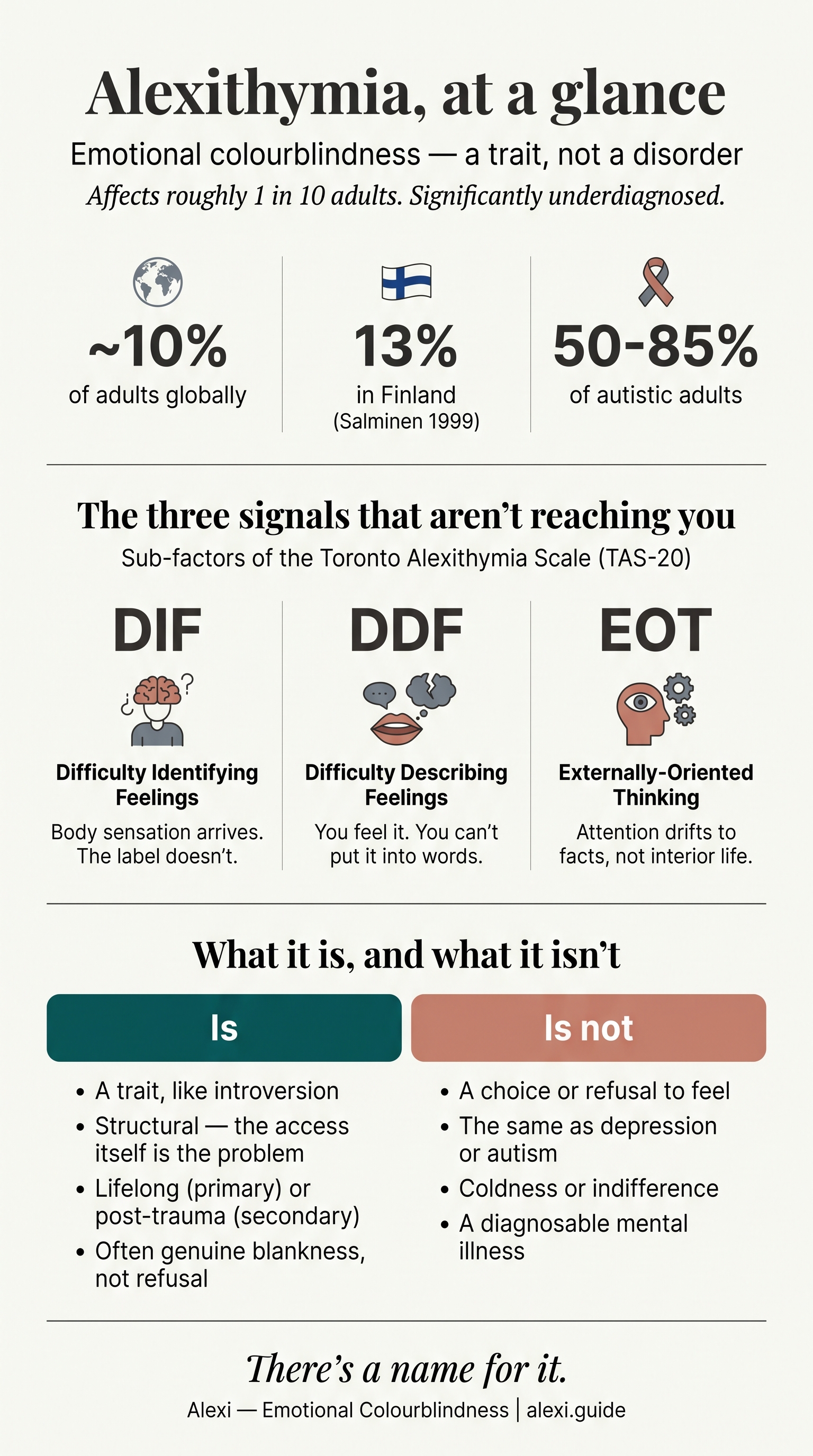
Six articles, written for the people living with alexithymia and the people who love them. A trait, not a disorder — reframed, sourced, and unhurried.
Companion essays
Five longer pieces.
-
Alexithymia Around the World: Why Some Countries Have More Words for Feelings Than Others
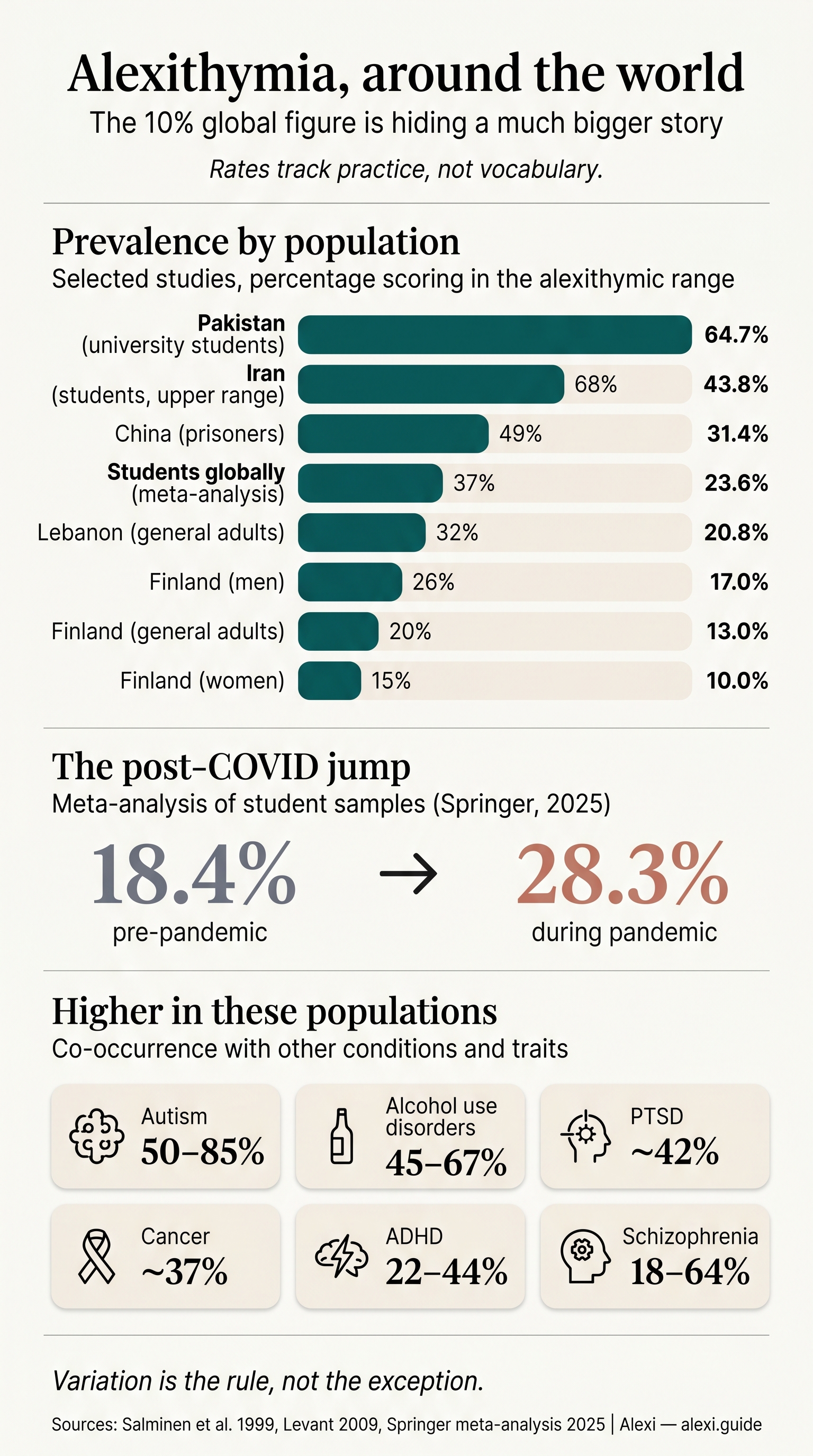
Alexithymia prevalence is 13% in Finland but up to 64.7% in some student samples. A worldwide tour of the data — Asia, the Middle East, post-COVID, gender — and what it means for you.
-
When Your Partner Can't Name What They Feel: A Field Guide to Loving Someone with Alexithymia
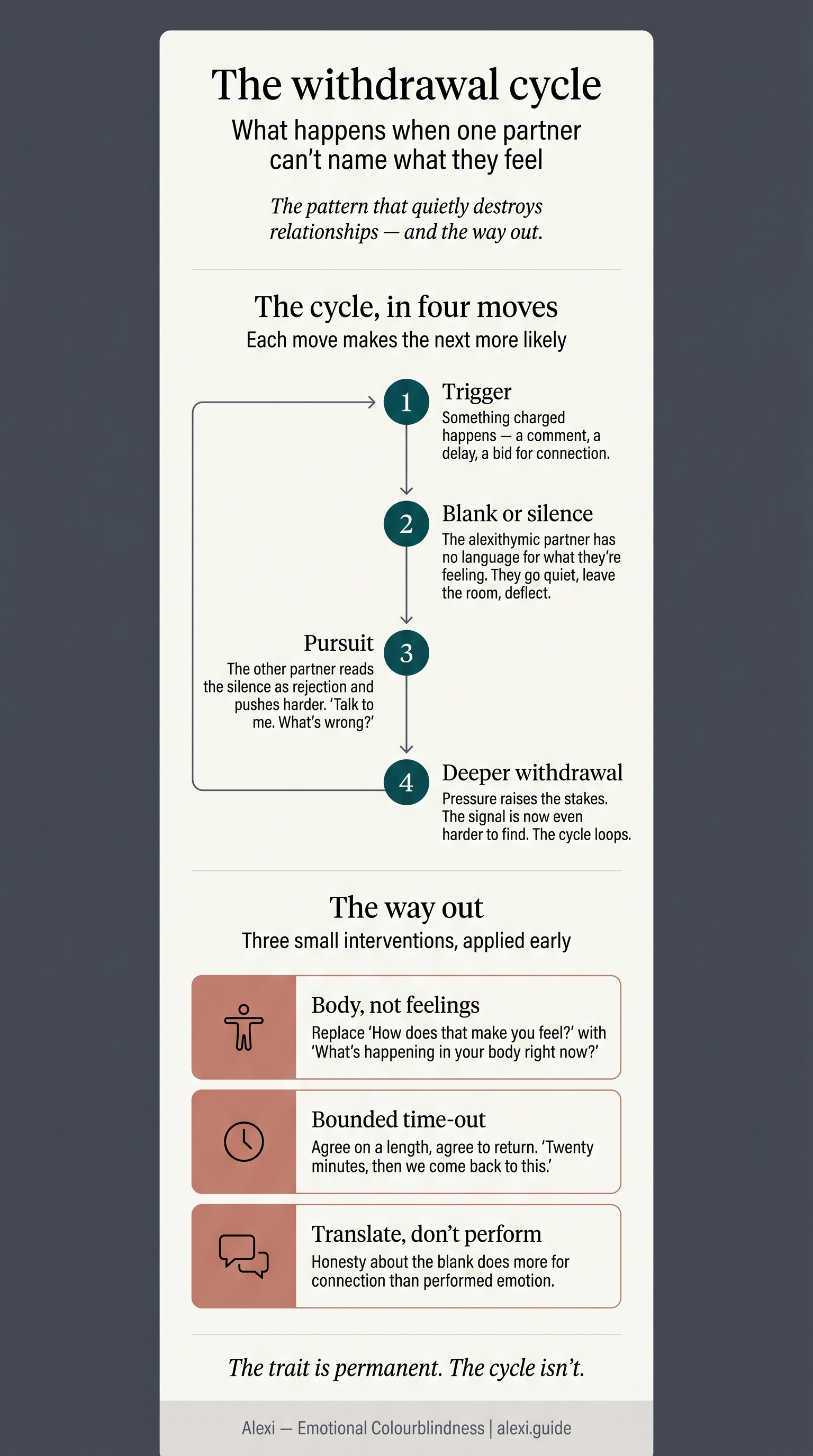
When your partner can't name what they feel — alexithymia in relationships, explained without pathology. Scripts, the withdrawal cycle, and what to do when 'how do you feel?' doesn't work.
-
Alexithymia, Autism, and ADHD: Untangling the Overlap (and Why Interoception Is the Missing Link)
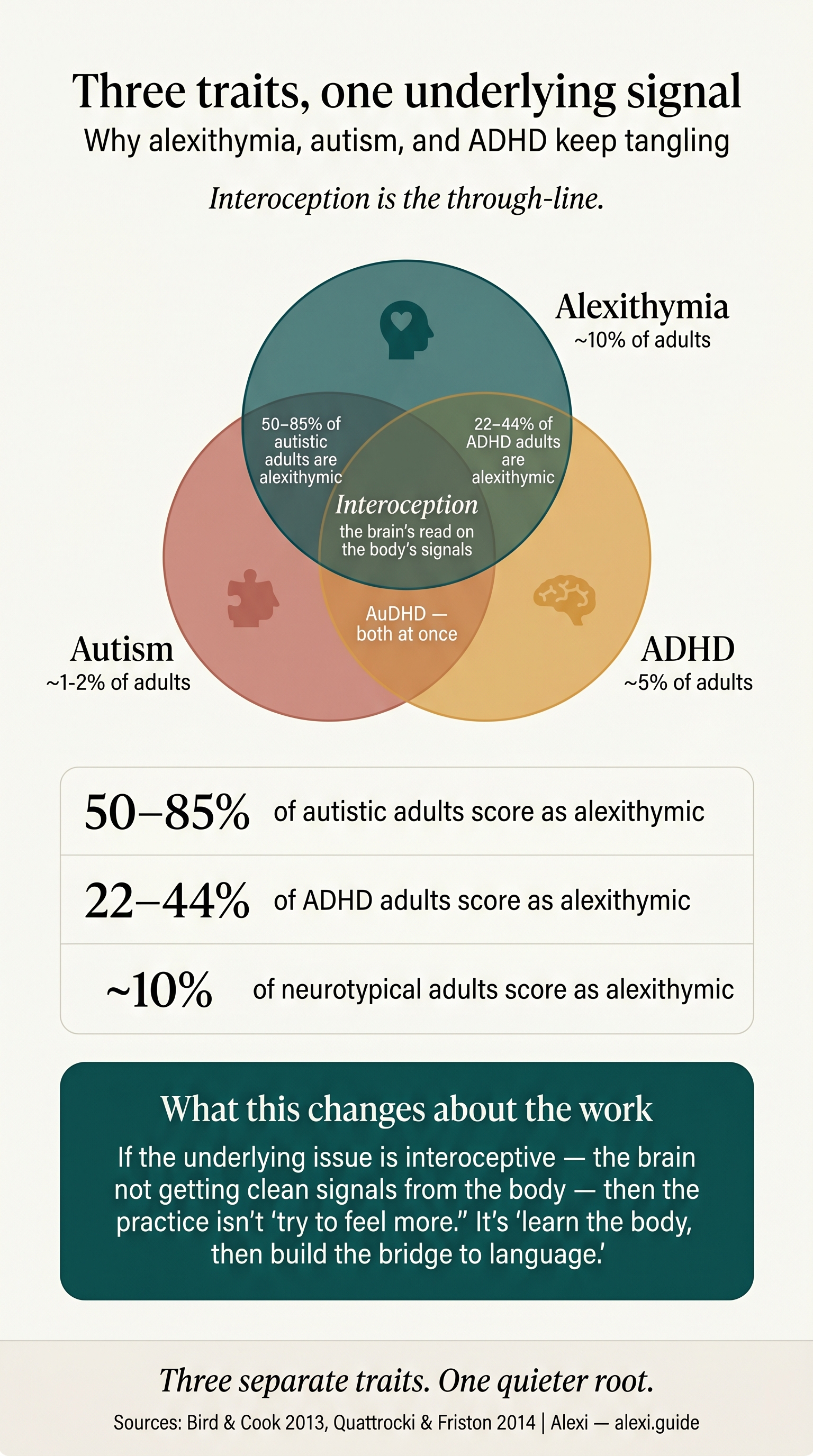
50-85% of autistic adults and 22-44% of ADHD adults score as alexithymic. Why? Because all three share an interoceptive root. A British/Australian guide for AuDHD readers.
-
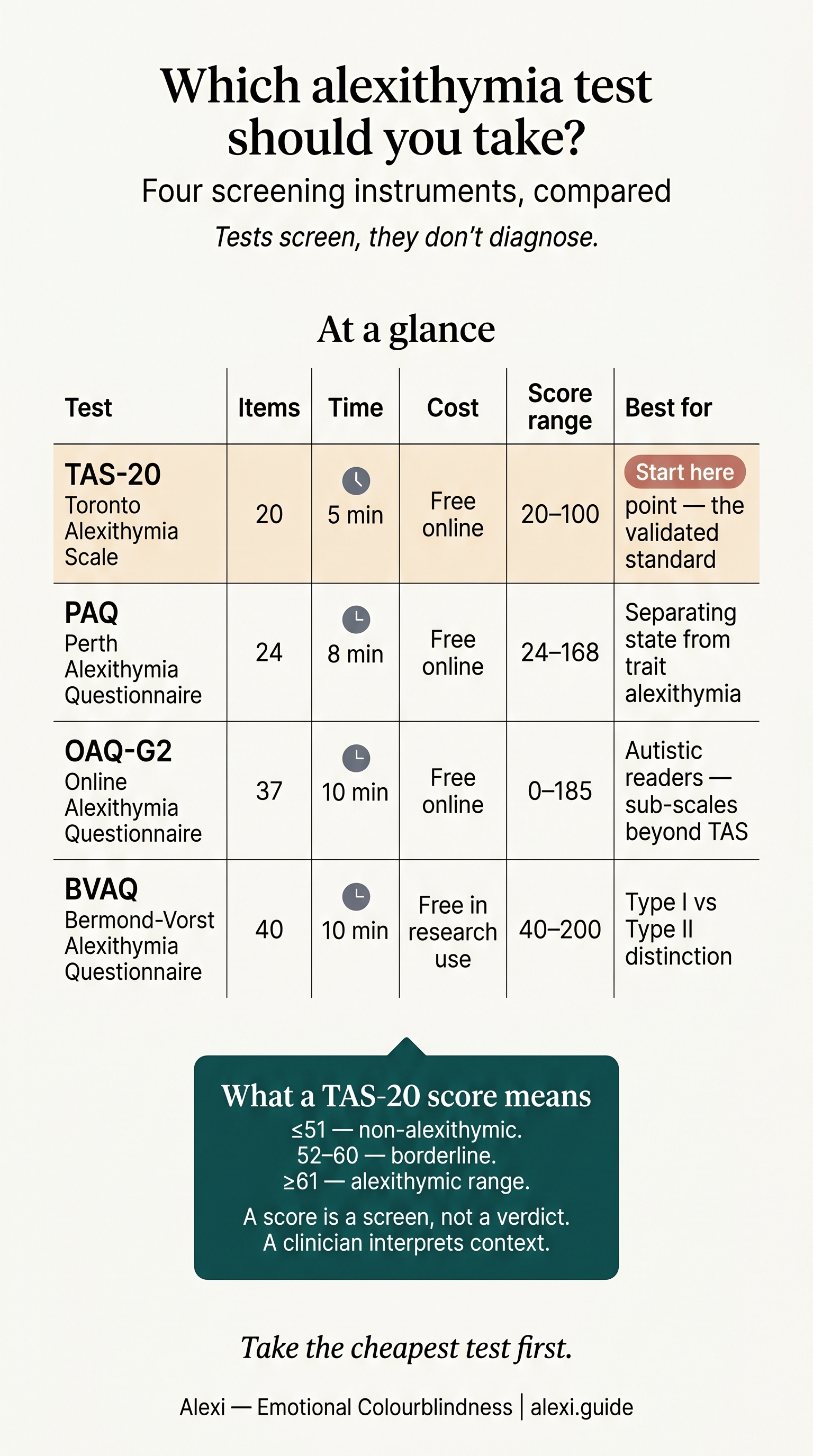
Am I Alexithymic? A Plain-English Guide to the TAS-20, the Perth Questionnaire, and What Your Score Actually Means
Compare the four main alexithymia tests — TAS-20, Perth Alexithymia Questionnaire, OAQ-G2, BVAQ. What each measures, scoring cutoffs, and which to take first.
-
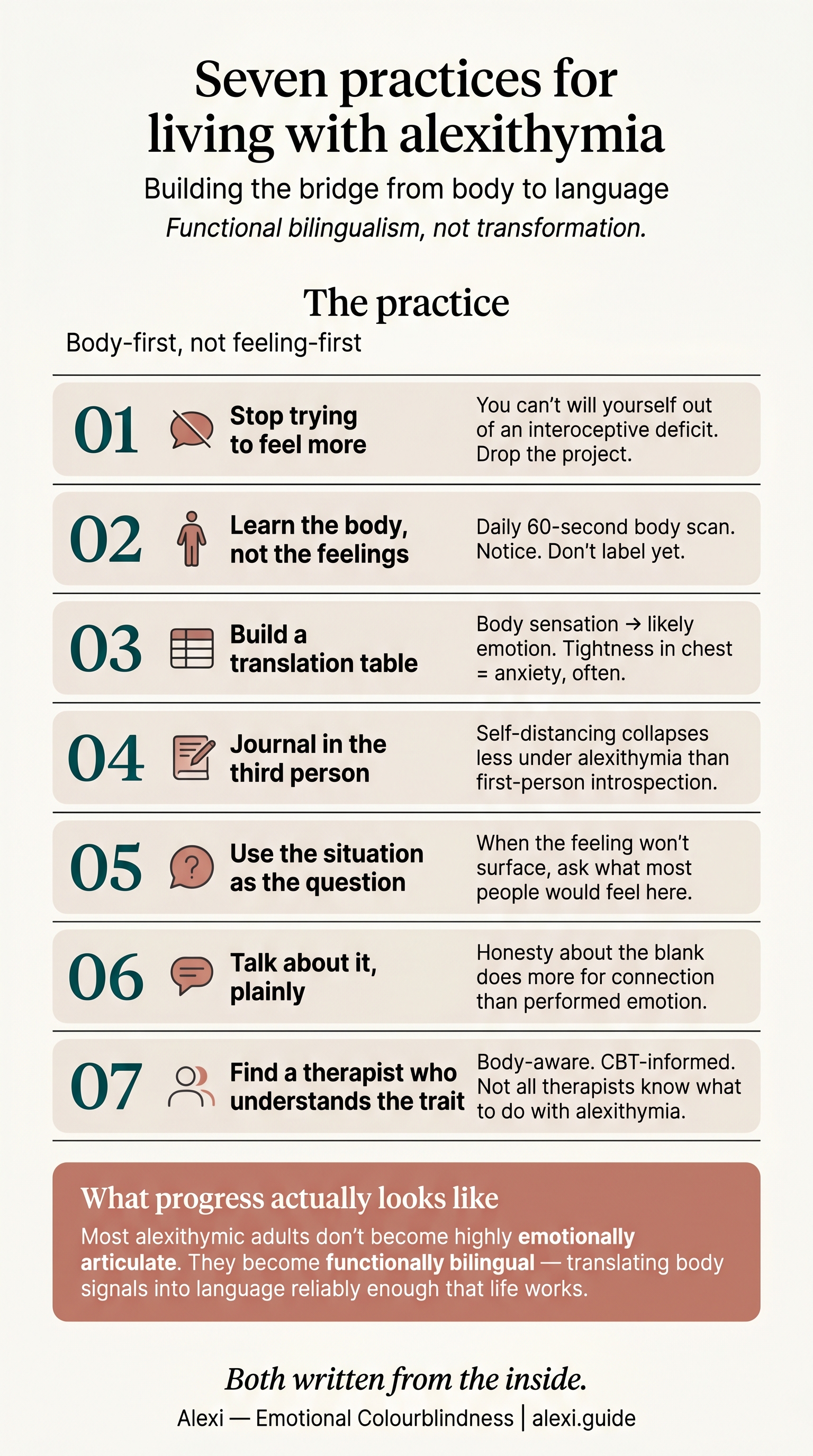
Living with Alexithymia: A Literary, Practical Guide to Building an Emotional Vocabulary (Without Trying to "Fix" Yourself)
Forget alexithymia treatment. Seven body-first practices for building an emotional vocabulary, written from the inside. UK/AU spelling.